Understanding Weight Limits: The Foundation of Compliance
Understanding the legal weight limits for your tractor-trailer is paramount for avoiding costly fines and ensuring safe operation. This guide provides a clear, step-by-step process to ensure compliance with federal and state regulations. Ignoring these limits can lead to significant penalties, including impoundment and legal repercussions. Let's delve into the essential aspects of weight management for commercial vehicles. For more detailed information on tractor-trailer weights, check out this helpful resource: weight limits guide.
Gross Vehicle Weight (GVW) and Axle Weights: Key Definitions
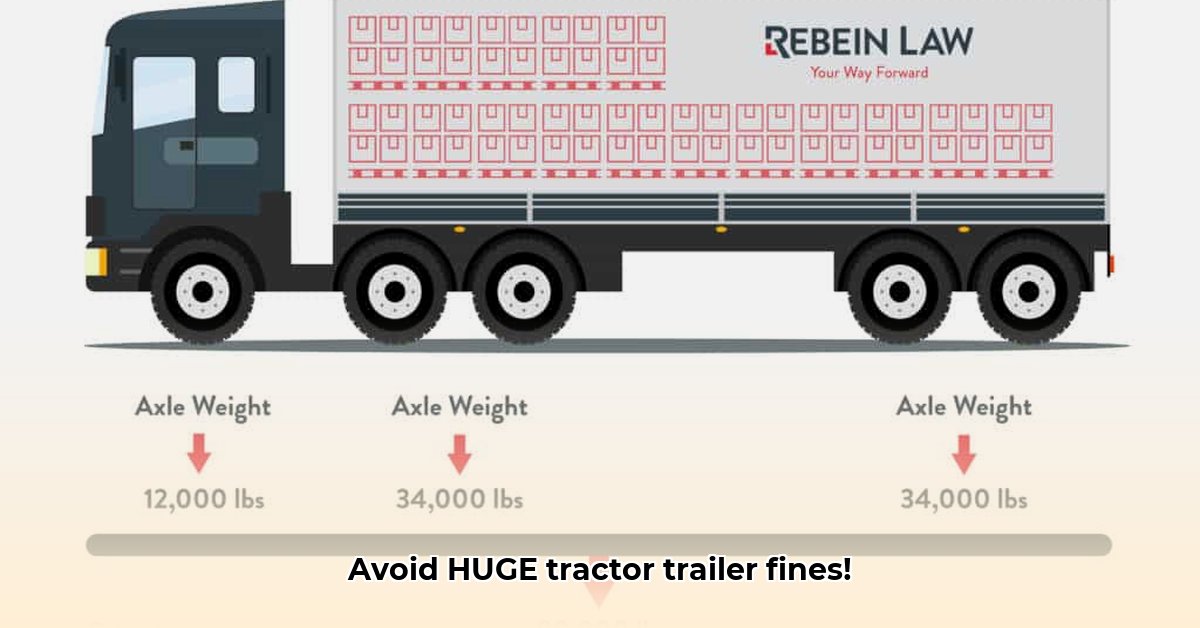
First, we need to define key terms. Gross Vehicle Weight (GVW) refers to the total weight of your fully loaded truck and trailer. Equally crucial is the distribution of this weight across your axles. Each axle has a legal weight limit, and exceeding these limits, even with a legal GVW, is a violation. Overloading an axle can lead to damage to roadways and increased risk of accidents.
Federal and State Regulations: A Two-Tiered System
The Federal Motor Carrier Safety Administration (FMCSA) sets national standards, but states often impose stricter rules. The federal maximum GVW is 80,000 pounds, but this is not a universal limit. Your legal weight varies depending on your route. Before each trip, research the specific regulations of every state you'll traverse. Failure to do so could result in significant fines.
Typical Axle Weight Limits (Subject to State Variation):
- Single Axles: Typically 20,000 lbs.
- Tandem Axles: Usually 34,000 lbs.
Keep in mind: these are common limits, not universal. State-specific regulations must be consulted.
Navigating the Federal Bridge Formula: Distributing Weight Effectively
The Federal Bridge Formula is a complex calculation determining allowable axle weights based on axle spacing. Its purpose is to protect bridges and roadways from damage caused by uneven weight distribution. While the formula itself is intricate, understanding its impact is essential. Fortunately, online calculators can handle the calculations for you, making compliance easier. Utilizing these tools ensures your weight distribution remains within legal parameters, thus avoiding expensive fines and potential damage to infrastructure. This simple step safeguards your operations and contributes to road safety.
Your Action Plan: A Step-by-Step Guide to Weight Compliance
Following these steps will drastically reduce the risk of weight-related violations. These best practices are designed to simplify the process and ensure ongoing compliance.
Step 1: Pre-Trip Weigh-In: Before commencing your journey, weigh your truck at a certified scale (e.g., CAT scales). This generates documentation verifying your weight, protecting you from disputes. Do not skip this crucial step.
Step 2: Strategic Load Planning: Evenly distribute your cargo. Careful planning minimizes axle overloading and ensures balance. Consider using load-distribution diagrams to optimize weight placement.
Step 3: Regular Vehicle Maintenance: Proper maintenance prevents mechanical issues that could create weight imbalances. Address any issues promptly to maintain optimal vehicle condition and compliance.
Step 4: Continuous Driver Training: Regular driver training reinforces safety and compliance protocols, ensuring ongoing awareness of relevant regulations.
Step 5: Route-Specific Regulations Check: Consult the Department of Transportation (DOT) website for each state on your route. This guarantees you are aware of all state-specific regulations.
Your Weight Compliance Checklist: A Quick Reference
This checklist serves as a quick reference for pre-trip and operational checks to ensure compliance.
| Item | Yes/No | Notes |
|---|---|---|
| Pre-trip weighing completed? | Retain scale ticket as proof of compliance. | |
| Weight within legal limits? | Verify weight against state regulations for every state on your route. | |
| Load properly distributed? | Use diagrams if necessary for optimal load distribution. | |
| State-specific regulations checked? | Note any special conditions or lower weight limits. | |
| Documentation in order? | Ensure all paperwork is readily accessible for inspection. |
"Mastering legal weight limits isn't just about avoiding fines; it's about responsible operation and road safety," says Dr. Emily Carter, Professor of Transportation Engineering at the University of Michigan. "Proactive compliance protects you, your cargo, the roads, and other drivers."
Remember, weight compliance is vital not only for avoiding penalties but also for ensuring the safety of yourself, other drivers, and the integrity of our roadways. Consistent effort in these areas will lead to smooth and legal operations.